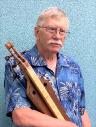
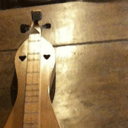
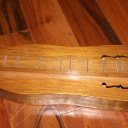
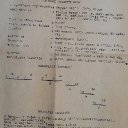
Jon Pickow's last performance
General mountain dulcimer or music discussions
Oh, Ken, this is a treasure. Thanks to you and to the Appalachian School of Luthiery in Hindman!
Rest in peace, Jon Pickow.
Oh, Ken, this is a treasure. Thanks to you and to the Appalachian School of Luthiery in Hindman!
Rest in peace, Jon Pickow.
Here is a video of Jon Pickow, one of Jean Richie's and George Pickow's sons, made by PBS a few days before he died. PBS Craft in America has given us (Appalachian School of Luthiery) permission to redistribute this beautiful piece, so please share with the FOTMD community with our blessing!
Ken
"The dulcimer sings a sweet song."
@fishdoc I've been thinking over your request and the only mountain dulcimer player who came to mind who might have a version of easy tablature is Don Pedi. Here's a link to his Jerusalem Ridge on Bandcamp:
https://donpedi.bandcamp.com/track/jerusalem-ridge
You could contact Don here:
Ken Hulme
Thanks for replying. I downloaded your article. Lots of good information! It answered a lot of questions that we have had; also a lot of stuff for us to learn. Thanks so much for providing the article; know you must have put a lot of work into it.
I will be sure to join the Beginners Players Group. Thanks for suggesting it.
Ken Longfield
Thanks so much for helping with the question about the depth of the sides.
The information about the factors that can change the sound are very interesting. I tried strumming in various places and the differences were very obvious. Had lots of fun trying that.
The answer was simple enough for me to understand; very much appreciated!
I don't think it is the same instrument. This one looks more like a decorated McSpadden to me.
Ken
"The dulcimer sings a sweet song."
@dan, I was wondering the same thing, but I don't think it is the same instrument. The one that was auctioned off had a flat head, not a scroll head. You can see the listing here .
Was that the embellished piece that was auctioned off for charity?
Welcome to the world of dulcimers! The other Ken has given you a good answer about depth of sides and factors influencing sound. I'm going to suggest that you all take a gander at the essay I wrote years ago for new players. It's called I Just Got A Dulcimer, Now What? . It's an illustrated glossary of terms, so we all speak the same jargon, plus answers to many beginner questions about tuning, playing, care and feeding of your new friends... You can find the article in our Beginner Players Group (you just have to "join" the Group), and download it free:
Ken Hulme's "I Just Got A Dulcimer, Now What?" Article - Strumelia | fotmd.com
IThe link is in the first post at the bottom of the Topic...
Let me answer your question, but first help you with some terminology. What you are asking is "does the 'depth' of the sides not the 'thickness' influence the sound."] Both will influence the sound of the dulcimer. Stiffer sides generally help with projection of the sound. The thickness of the sides is usually between 1/8 th and 1/10 th of an inch and helps create the stiffness. Depth can vary as you've noticed. Deeper sides tend to emphasize the bass sounds, but other factors come in to play. The vibrating string length (VSL), the types of wood used, the strength of the glue joints, the type of strings, how you play it, etc. all influence sound. Notice how different the dulcimer sounds when you play close to the bridge, over the strum hollow, over the fret board.
I hope this answer was simple enough, but still gives you some other information to expand your knowledge of the dulcimer.
Enjoy your dulcimer journey. Play well. Be safe.
Ken
"The dulcimer sings a sweet song."
Wow. What a lot of great information. Thanks so much for all the responses.
To answer the questions:
I think its a deering because it has a tag inside that I believe says Deering Stringed instruments. The letters are very curved and hard for me to read though.
She is currently playing it equidistant but also moves it to play double melody strings.
The pictures in the advertisement looks just like hers, particularly the head and the thicker sides. The sides on hers is 2 5/8 inch thick.
Does the thicker sides make a dulcimer sound different? It does sound different to us. It seems to be louder and have more of a drone than our other dulcimers. Please keep the answer simple as we are new dulcimer players.
Yes, we are new dulcimer players but already have four dulcimers between the 2 of us.
Thanks so much again!!!
Here's a link with photos to a mountain dulcimer sold as a Deering:
Around 1975 Greg Deering and his fledgling banjo company did make a bunch of mountain dulcimers. Your might be one of them. What makes you think it's a Deering?
From the web:
"...So, around July 1975, we officially started Deering Banjo Company. That lasted until November 1977. Geoff [Stelling] had bought a shop building and I was renting part of the building from him. I had a crew of about nine people. We were making about 40 banjos a month. And Geoff came to me one day and said, “You shouldn’t be Deering Banjo Company. It should all be Stelling Banjo Works, and you should just be working for me.” And I said, “I’m not going to do that.” The next day, he cut my orders in half. So, I stayed up all night and built an Appalachian dulcimer and, when my crew came to work the next day, I put half my crew to work making dulcimers. I went out, got a bunch of orders for them and just kept on going...."
also:
"...The family-owned Deering Company, which was formed in 1975, has 49 employees. The enterprise has the self-descriptive slogan “The Great American Banjo Company,” with “Proudly Made in the U.S.A.” emblazoned on banjos made there.
Janet Deering is CEO of the company, and during a tour of the manufacturing areas of the facility, she spoke warmly about the deep roots the company has nurtured in East County throughout its history. Her husband, Greg Deering, made his first banjo in an industrial arts class at San Diego State in 1968. The couple initially made banjos and mountain dulcimers in the garage of their home, before moving to a Lemon Grove location. After outgrowing that facility, the company moved to its current factory site in Spring Valley during early 2001. Over its 40-plus years, Deering has built over 100,000 banjos. ..."
Can't tell you what wood the side are the top appears to be spruce. The fingerboard and tail cap appear to be walnut. Not sure what the fretboard and tuning head are they could be birch.
Is she playing this as "four-equidistant" or "doubled melody" strings? If the latter, the melody strings are too far apart. True diatonic fret layout -- no 6+ or 13+ fret>
A Deering dulcimer should have a maker's label inside the bottom, visible from the left (nearest) rear sound hole. Deering instruments, including the banjos, were started by Greg Deering.
I'm pretty much a beginner, although I do play other instruments, so I'm a relatively quick learner. I'm learning the fretboard and some basic chords.
My big dulcimer project is working on a Christmas album to give to friends this year. One song is already on my Audio list, "People look East", which includes DAD dulcimer, ADAD mandolin, acoustic steel string guitar, and an electronic pipe chanter. More are forthcoming for this forum (as long as they include dulcimer, of course!).
Does any one have any information about Deering dulcimers?
My daughter has one that was made in 1981. We think they were made by the deering banjo company but not sure about that. We have searched the internet, but haven't found much information about them.
She is particularly interested in hearing about the history of it. Does anyone know what type of wood was used? It seems very lightweight.
Thanks so much for any help you can give us.
Thank you, Dusty. Terrifying close call you had there!
Yes, music does help...I try to play at least a bit each day, both my guitar and dulcimer. But some work days go a little longer and I have to choose just one to play, or I get to play for only a few minutes--or no minutes at all on either. And I feel it when I don't get to play. It really does help to get lost for a little while, just you and your instrument...
OK, I said Jerusalem Ridge is one of my favorite songs, but I would like a copy of easy TAB for it. Anyone know where I can get it?
Well, I haven't been sewing or baking, but I was able to visit my dad for a month in sunny Arizona over Christmas and help him through a health crisis which began near the end of Dec. I'm happy to report is is already feeling better and is happy to be able to walk with a walker, even though he's not (yet!) ready to get back on the golf course. New meds for diabetes and heart issues was mostly what he needed, but it was certainly a very scary time. He'll be 95 in February.
My new activity this fall and winter has been working on foreign languages on the website Duolingo. I started with several months of Spanish and then switched over to French. It's giving my brain a real workout.
I don't play my dulcimers every day, but when I do, I tend to play for several hours. I want to get back to working with Tabledit, too. I was just starting to get somewhere with it when I had to set it aside for awhile.
Good health to you all! I hope your music makes the days merrier.
Sorry to hear about your friend, @lisavb. 
Glad to hear about your house. We had a similar accident a few years ago. A massive limb from a 75-year-old oak tree fell down, only barely grazing the gutter on the corner of our house. I couldn't even tell that the roof had not been damaged until the next day when I was able to remove all the branches from up there. But the front yard was completely filled with branches and leaves. From the street, you couldn't even see the house. It just looked like a chimney sticking out of a massive piles of green leaves and brown wood. I was so lucky that my neighbor was a gardener who had just retired. He showed up with his chain saws and the two of us worked for a couple of days until the yard was clear. Then it took another year for the lawn to come back since it was entirely covered in saw dust. But at least the house was OK.
This is a solid wood walnut dulcimer, that uses silver nickel nut and bridge. Extremely thick waist, but still enough for an hourglass. It is 1970-1980 build. It may be a Sylvan James who is known for thick waist dulcimers around that time, but not sure.
@lisavb I offer my deepest sympathy on the death of your friend. And while I am sorry about your RAV4, it is good your house was spared.
I remind myself the plague will not last forever-- history teaches us this. There are some lovely flowers growing out of the compost pile with lots of wonderful music being made despite everything. Music can be a balm to the weary spirit. Keep enjoying that McSpadden and Jessica C's workshops! (Jessica makes incredibly good music!)
I could use some bright-side thinking about now. Found out over the holidays that an old friend died of COVID out in Nebraska. And last week we had a storm blow through--a tree fell on our property. *Barely* missed the house, but it mashed my beloved RAV4. Landed square on it. Should hear next week if it's repairable or totalled. I'm suspecting the latter, given the hideous damage. But it did start up and drive for the tow guy, FWIW.
A huge bright spot has been Jessica Comeau's Zoom workshops. She started them up earlier in the summer, roughly every other week. I've attended every one and they bring me such joy. There is one today, in fact. People from all over the place--including England and Germany--have been attending.
And I've been absolutely loving my new cherry McSpadden! Makes me so happy to pick her up and play. So glad I went ahead and ordered her. Beautiful to look at, beautiful to listen to. Thanks again to all who responded and helped me with my decision. :)
Awesome, Dave! I'm going to watch this video. Such tips can be applied to many dulcimer, scheitholt, epinette, and hummel playing techniques.
At the risk of being boring here is a howto video teaching strumming fingering and all sorts
which although in Hungarian is mostly understandable as music is more or less universal
When it gets near the end the noter section and vibrato tips leave me open mouthed
The one in the video appears to be a traditional design and for any interested here is another video which shows how citera are played using a noter and using an inward strum pattern how the tremolo is achieved
I understand that tuning is basically always using intervals such as a ll melody strings are tuned to g1 the rest being drone strings tuned to C, c1, c2 g2, c3.which is a little contrary the info sheet I posted which I never understood especially "h"Tuning depends on size so this is a good base.
Small "C" citera.
Measure 48-52 cm.
Keynote: g'. Melody strings - g'. Resonant strings - g' - c' - c - g . Side strings c'' - g'' - c'''.
Great "C" citera.
Measure 70-80 cm.
Keynote: g. Melody strings - g. Resonant strings - g - c - C - G . Side strings - c' - g' - c''.
Watching this video explained a great deal to me
Dave, thanks a million for the links to other photos of your citera-- it's wonderful! It'd sure be fun to play around with. There was a sizable Hungarian population here in my little corner of SE Ohio, in old coal country.
Dave, I hadn't considered ash, but that is certainly a possibility. Thank for sharing all those photos. We supported a Hungarian refuge family years ago and I had a Hungarian dictionary which might have helped me in understanding the info sheet. Unfortunately I gave it away when I retired.
Ken
"The dulcimer sings a sweet song."
For anyone interested here is a link to my citera pictures on public access stored on "Tinterweb"
https://flic.kr/s/aHsmf7tizc
The factory was a furniture factory apparently so they would have a variety of local timbers available.
I have myself pondered the same question and suspect the frame is perhaps Ash which is generally easily carved, light in colour and not too heavy
I am trying to attach some detail pictures but I first have to remember how BB system works and where they are stored meanwhile this is the Hungarian info sheet from 1981
A major bright side for me is extra time with my teenage daughter. In normal times the last thing she would want to do is hang out with her parents, especially now that she and her friends are getting their drivers licenses. But we spend lots of time together every day; I'm grateful for that.
I've also gotten to know dulcimer players from around the country in Zoom gatherings of various sorts. My "local" dulcimer group is no longer local as about half of the attendees each month are from all over the country.
Still haven't learned to sew, though.
Looking on the bright side- I'm guessing we have all become better cooks this year! Also maybe more knowledgeable and reading more? Perhaps started a garden, built things, or learned to sew, or bake?  I know I've been doing most of those things over the past 10 months.
Hi, all, up here in Ontario we are locked down again. We are finding that deliveries of the Pfizer version of the vaccine are going to be delayed a bit because of changes in production in Belgium. So the Provincial health authorities are talking about delaying second shots to 48 days after the first. Not happy about that, because of course the clinical trials approvals were as far as I know predicated on there being 3 weeks between doses. Lots of disagreement on that in the medical community, (which I follow because I worked in the hospital system up here for 35 years.) The only other vaccine approved by Health Canada is the Moderna. Johnson and Johnson is possibly going to get approved, no idea when. Astra-Zenica will be coming from Britain if it gets approved, but they are now racing the increased-contagion variant so who knows when.
Since I am retired from the hospital for 11 years now I am no longer covered by the health-system workers line, so no injection for me yet. At 74 years 5 months I am just a bit under the Group 1 line too, but that may change. Sandie is younger by 2 years but asthmatic. We will see if that makes a difference.
At this point, frankly, I would take the Cuban, Russian or Chinese versions. The wait is killing people!
In Arizona the governor checked on when the reserve vaccines that were released by the Government were going to arrive and how many. He found out that there are NO reserve vaccines, never were, and that nothing is coming. For Me I am waiting for the Johnson and Johnson single dose product. Too many unknowns about the second dose at this point, if there ever will be one, for the Pfizer or the Moderma. There also is the Astra Zenica coming. Needless to say I will have to wait anyways, if I ever do receive it, probably by 2022 for my age group. By then we will either know if the vaccine works, especially for the new B117 version.